Anticipating the arrival of summer is the perfect time to swap your spreadsheets for something to keep you up past midnight, and we have some ideas that are too good to leave on the nightstand. Fiction, nonfiction, and celebrating America’s 250th birthday – we have recommendations for all!
Please, if you have not already, start with The Correspondent by Virginia Evans, a ‘debut’ novel that our entire team read and recommends from a Winston-Salem, NC-based writer. Believe the hype about this love letter to the lost art of letter-writing that Ann Patchett herself championed. Then pick up The Calamity Club by Kathryn Stockett, her first novel in seventeen years since The Help sold 15 million copies. This is a depression-era story of underestimated women in Mississippi that Oprah Daily called “so immersive you never want it to end.” If you did not get to Fredrik Backman’s My Friends yet, this one will please all of the fans of Ove and Beartown and did win the Goodreads Best Fiction award for 2025 – nobody does bittersweet friendship like Backman. Closer to home, Culpability by UVA English professor Bruce Holsinger, is an Oprah’s Book Club pick that digs into the murky ethics of a college town with a dash of AI for fun. It is perfect reading for anyone who thinks they understand how institutions really work. We are looking forward to Pulitzer Prize-winner Elizabeth Strout’s latest, The Things We Never Say, which reviewers are calling her most emotionally devastating work yet, high praise for the author of Olive Kitteridge. The Mad Wife by Meagan Church is an eerie novel about women and their changing roles and connections over time and personal trials. It is interesting ‘historical fiction’ from the mid-20th century. Tana French, the queen of literary crime fiction, brings us The Keeper which wrapped up the moody trilogy in rural Ireland. You know the writing is effective if you are longing to visit a community that seems to have a high incidence of unexplained death! So Old, So Young by Grant Ginder is sharp, funny, and tender, touching on friendships across the decades, aging, ambition, and family. It might make you call someone you’ve been meaning to call!
Another very recent offering is Whistler by Ann Patchett – her tenth novel, that is another study of friendship and connection over time -what the Boston Globe called “a rare phenomenon in contemporary fiction: both majestic and intimate.”
We were ready for the much-anticipated novel from veteran writer Elin Hildebrand in a departure from her Nantucket setting. The Academy is co-written with her own daughter Shelby Cunningham, trading salt air and lobster rolls for the scandals of an elite New England boarding school where an anonymous gossip app called ZipZap is slowly destroying everyone’s carefully constructed lives. Kin by Tayari Jones is the latest Oprah’s Book Club selection and is an intimate story of two motherless girls navigating friendship, race, and survival across the Civil Rights-era South. Shy Creatures by Clare Chambers is the quiet stunner that we can’t stop talking about – a mystery based on true events about a man found living in complete isolation. It explores relationships and changing roles in 1960s London. Death of the Author by Nnedi Okorafor is a genre-defying, NAACP Image Award winner that is part literary novel, part AI meditation, and part memoir-in-disguise. It is bold, strange, and completely unforgettable. And following that genre-defying theme, King Sorrow by Joe Hill was one of our favorites of the last year – and not our typical profile for leisure reading-combining fantasy, thriller, literary fiction, and coming-of-age saga. This epic about six college friends who have a shared, super-natural experience and the effects and unraveling over the next four decades is a deeply human meditation on guilt, friendship, and the long shadow of one reckless night. (Yes, Joe Hill is Stephen King’s son; yes, he winks at it with a cameo from one of his father’s most famous villains.) But King Sorrow stands entirely on its own; it might get you through that long flight or lazy few days of vacay!
Nonfiction Reads
If our fiction list will feed your soul, this nonfiction lineup will sharpen your game. Start with Inside the Box: How Constraints Make Us Better by David Epstein, the follow-up to his beloved Range that fans of that book have been waiting seven years for and Malcolm Gladwell says is his best yet. His counterintuitive argument: total freedom is actually the enemy of creativity; constraints are what unlock breakthrough thinking.
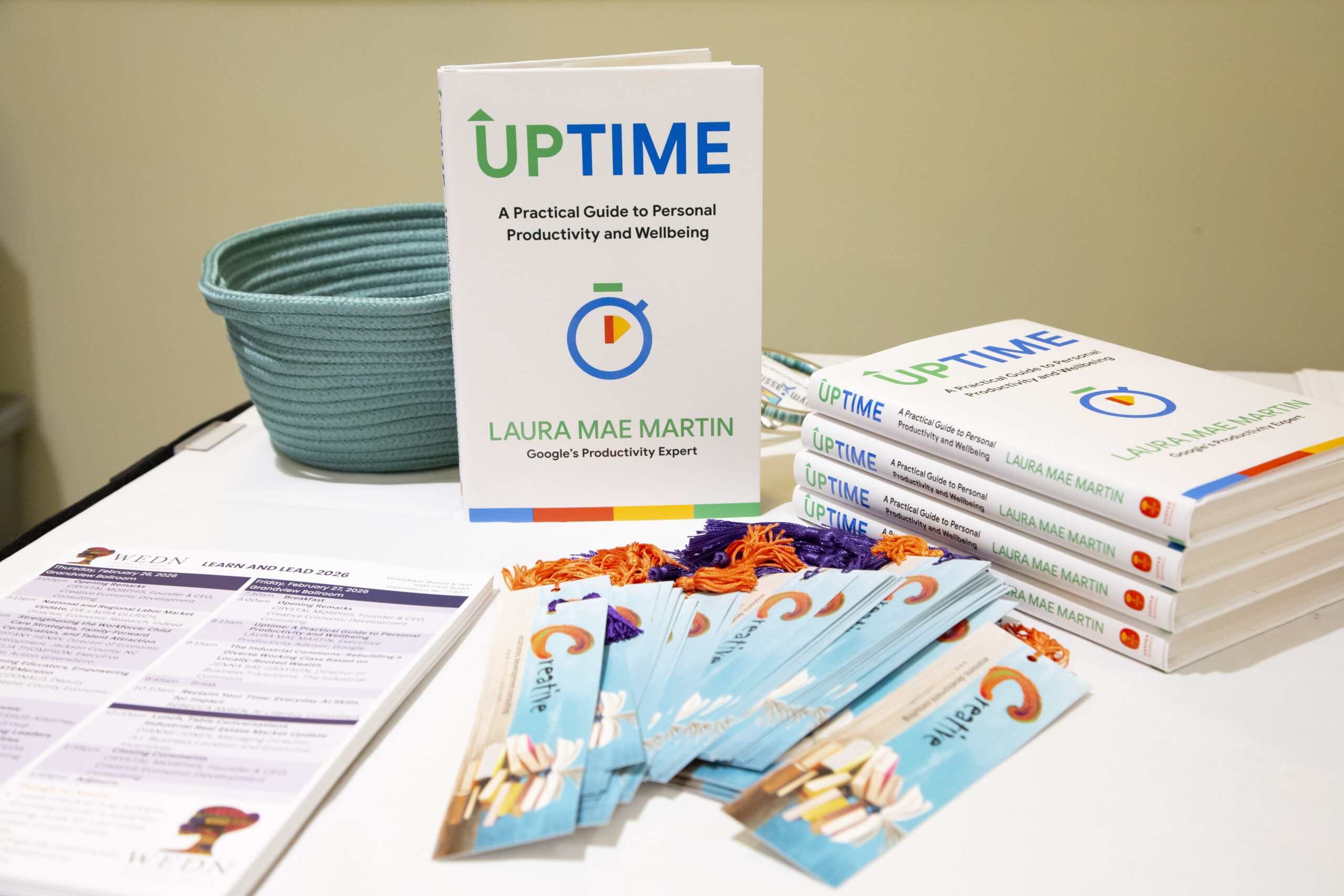
Uptime: A Practical Guide to Personal Productivity and Wellbeing by Charlotte resident Laura Mae Martin was the featured book at our 2026 Women’s Economic Development Network conference. Laura spoke there about how she built Google’s executive productivity program and coaches the company’s top leaders.
The Confidence Code: The Science and Art of Self-Assurance—What Women Should Know by Katty Kay and Claire Shipman was recommended by Dianne Jones of JLL, also a speaker at WEDN this year. It tackles the research behind why capable, accomplished women can underestimate themselves – and what to do about it. Unreasonable Hospitality: The Remarkable Power of Giving People More Than They Expect by Will Guidara is part memoir and part business case study of his taking Eleven Madison Park to the top of the World’s 50 Best Restaurants list not through food but through radical attention to the experience of every single guest, with many ideas that transfer into client hosting, community engagement, and cultivating your brand through your actions. Time Anxiety: The Illusion of Urgency and a Better Way to Live by Chris Guillebeau is the book explaining why so many high achievers feel perpetually behind no matter how much they accomplish, and how to actually fix it (You’re welcome). When Everyone Knows That Everyone Knows: Common Knowledge and the Mysteries of Money, Power, and Everyday Life by Steven Pinker — one of Bill Gates’ five holiday picks for 2025 — is a deep dive into how “common knowledge” (knowing what other people know) shapes every conversation, negotiation, and social dynamic we navigate, crucial when connecting with new communities, or introducing someone new to yours. Reset: How to Change What’s Not Working by Dan Heath won the 2025 Porchlight Business Book Award and was named a best book of the year by both Oprah Daily and Adam Grant. It is a methodical, energizing argument for the best time to fix what isn’t working and is packed with sharp case studies that will change how you approach your next strategic planning session. Speaking of community discussions, I Never Thought of It That Way: How to Have Fearlessly Curious Conversations in Dangerously Divided Times by former journalist Monica Guzman is a practical, warmhearted guide to having genuine conversations across deep disagreement. She leans on the radical premise that curiosity is more powerful than argument. Especially for economic developers in divided communities, this book is for those who believe that listening is a leadership skill.
Several development-related books came our way over the last year including Arbitrary Lines: How Zoning Broke the American City and How to Fix It by M. Nolan Gray – a clear-eyed, often provocative argument that single-use zoning is one of the primary causes of America’s housing crisis, urban sprawl, and economic stagnation. If you’ve ever sat in a public hearing and wondered how we got here, Gray will tell you, and it might not make you feel better, but it will make you smarter.
Wastelands: The True Story of Farm Country on Trial by Corban Addison takes the reader inside the hidden human cost of industrialized agriculture, focusing on several families and businesses in eastern North Carolina. This fast-paced, thriller-styled narrative will keep you engaged and educate you on all sides of this issue (with a forward by John Grisham!) Stand Up That Mountain: The Battle to Save One Small Community in the Wilderness Along the Appalachian Trail by Jay Erskine Leutze is a true account of a ten-year legal battle waged by a small Appalachian community in Avery County to stop a mining company from dynamiting Belview Mountain, which sits directly alongside the Appalachian Trail. It begins with a phone call from a fourteen-year-old girl named Ashley and her Aunt Ollie, and ends with one of the most remarkable grassroots victories in conservation history. The Raleigh News & Observer said it will “make you want to head for the mountains”. Everything Is Tuberculosis: The History and Persistence of Our Deadliest Infection by John Green has been on the NYT best seller list for years and was Goodreads Readers’ Choice Award winner for Nonfiction in 2025. It is, on the surface, a book about a disease. It is actually a book about inequity, and about how “trails of injustice” that allow poverty to persist also allow tuberculosis to thrive. This is for all the economic developers thinking every day about why some communities thrive and others don’t.
A very quirky take on development impacts on communities is Murderland: Crime and Bloodlust in the Time of Serial Killers by Caroline Fraser, an Edgar Award winner named a Best Book of 2025 by The New Yorker, NPR, the Chicago Tribune, the LA Times, Vulture, Slate, and Newsweek simultaneously. It is part true crime, part coming-of-age memoir, part environmental history, and it makes what we found to be a startling argument: that the toxic industrial landscape of the Pacific Northwest produced the serial killer era. As You Wish: Inconceivable Tales from the Making of The Princess Bride by Cary Elwes is the palate cleanser when you need one – a pure delight about the making of The Princess Bride, told by Westley himself, with contributions from nearly the entire cast. The New York Times called it a book that makes you “watch the movie all over again with newfound knowledge,” and there are worse ways to spend a summer evening! Shoe Dog: A Memoir by the Creator of Nike by Phil Knight is the memoir Warren Buffett called one of the best books he had ever read, and Bill Gates put it on his annual list of five must-reads. It is a raw and surprisingly candid story of how Nike came to be. It’s not the triumphant corporate legend you might expect, but a decades-long story of near-bankruptcy, creative desperation, and the stubborn belief in a completely uncertain idea. For an enduring biography, Clementine: The Life of Mrs. Winston Churchill by Sonia Purnell is the book that finally does justice to one of the most consequential women of the twentieth century: Clementine Churchill (and, she tells us, “it rhymes with mean, not mine!) Incredibly, this is the first fully researched biography written about her and her influence on her husband, Winston. She vetted his speeches, managed his moods, softened FDR’s initial dislike of him, and held the whole enterprise together for fifty-seven years, largely without credit.
America Celebrates 250
With America celebrating its 250th birthday this year, the Semiquincentennial, as it’s officially and somewhat awkwardly known, we have boosted our reading of history, especially focused on the US. We the People: A History of the U.S. Constitution by Jill Lepore is last year’s Pulitzer Prize winner for History and one of President Obama’s favorite books of 2025. It is basically a study of the many attempts since before it was even ratified to amend the US Constitution (12,000 amendments proposed since 1789!) with only 27 ratified changes and none of substance since 1971. For anyone in local government or civic leadership, this is relevant in this anniversary year and an essential companion to Lepore’s earlier landmark, These Truths.
The British Are Coming; The War for America, Lexington to Princeton, 1775-1777 and The Fate of the Day: The War for America, Fort Ticonderoga to Charleston, 1777-1780 by Rick Atkinson are books for those who prefer our history with narrative momentum and the pace of a propulsive novel. These are the first two volumes of his Liberation Trilogy about the American Revolution. Atkinson spent years in the archives to recreate the Revolution in granular, cinematic detail, and the result is a reminder that the founding of this country was a desperate, improvised, nearly failed enterprise pulled off by people who had no idea if it would work. We satisfied some of our nostalgia for the “Little House Books” with Prairie Fires: The American Dreams of Laura Ingalls Wilder by Caroline Fraser that won the 2018 Pulitzer Prize for Biography and the National Book Critics Circle Award. It is the definitive biography of Laura Ingalls Wilder, and what Fraser reveals is that the beloved Little House books are not the gentle pioneer idyll most of us grew up believing them to be, but more of a carefully constructed mythology that minimized poverty, hardship, and the violence of westward expansion from the historical record. It is thought-provoking on several levels. And finally, Tunnel 29: The True Story of an Extraordinary Escape Beneath the Berlin Wall by Helena Merriman is an international bookend to our list. It is the true story of a group of students who, in the summer of 1962, dug a tunnel under the Berlin Wall to smuggle out dozens of men, women, and children from East Berlin. The BBC podcast on which the book is based drew over three million listeners and won the British Podcast Awards. As America reflects on 250 years of hard-won and fragile democracy this summer, Tunnel 29 is a great reminder of what the absence of it actually looks like and what people are willing to risk to get it back.
If our reading wrap-up did not give you enough material to evaluate, below are some lists from sources we enjoy that should keep you busy through to the fall! Happy Reading and Happy Summer! As always, we’d love to know what’s on your list.
More Reading Recommendations
- Kin to Yesteryear: 10 of the best books of 2026 so far | BBC
- 100 Best Novels of all time | The Guardian
- The best books of 2026 so far | The Economist
- Summer Books: America at 250 | Wall Street Journal
- JPMorgan’s summer reading list for the wealthy | JP Morgan
- Some of my favorite books of 2025 | GatesNotes
- The New Books to Refresh Your Thinking in 2026 | Adam Grant
- 15 books our critics can’t wait for this summer | NPR
- The Best Audiobooks of 2026 (So Far) | NY Times
- A Summer Book Recommendation Bonanza | NY Times Podcast
- The Novels Everyone Will Be Reading This Summer | NY Times
- MIT Sloan’s 2026 summer book collection | MIT Sloan School
- The 18 Best Books of 2026 (So Far) | Esquire
- 10 Must-Read Summer Books, According to BookTok Creators | People.com
- The 24 Best Books of Summer 2026 | Oprah Daily
- Readers’ Most Anticipated Books of Summer…and the Rest of the Year! | Goodreads